If you have been researching e-commerce passive income models, you have likely come across the concept of Amazon store management. The promise of hands-off monthly revenue is appealing, but one major question always stops prospective investors in their tracks: how much does it actually cost?
Search online, and you will find answers ranging from a few thousand dollars to upfront investments exceeding $50,000. This massive gap creates confusion and raises valid red flags for business owners trying to run realistic financial projections. Many management agencies intentionally hide back-end operational costs, leaving investors surprised by hidden charges after signing contract agreements.
The truth is that Amazon automation cost is not a single flat rate. It is a structured combination of upfront setup fees, ongoing working capital for physical inventory, Amazon platform fees, software subscriptions, and profit-sharing models.
This guide breaks down every line-item expense associated with hiring an e-commerce management agency in 2026. You will learn the true costs involved, how to evaluate low-cost versus high-tier management models, and how to avoid overpaying for store operations.
What Is Amazon Automation?
Amazon automation is a professional service model where an experienced e-commerce management agency builds, manages, and scales an Amazon seller account on behalf of an investor or business owner. Instead of handling daily logistics yourself, you act as the capital partner while the agency handles operational execution.
A full-service e-commerce agency manages every technical aspect of your store, including:
- Comprehensive product research, brand sourcing, and wholesale supplier negotiations.
- Listing creation, search engine optimization (SEO), and Brand Registry setup.
- Inventory planning, prep center logistics, and Amazon FBA compliance.
- Daily account monitoring, buyer-seller messaging, and order management.
- Pay-Per-Click (PPC) advertising management and revenue scaling strategies.
While some entrepreneurs prefer managing operations independently, investors often choose to delegate execution to established management teams. Understanding the operational trade-offs between self-management and agency execution helps protect your capital and operational efficiency over time.
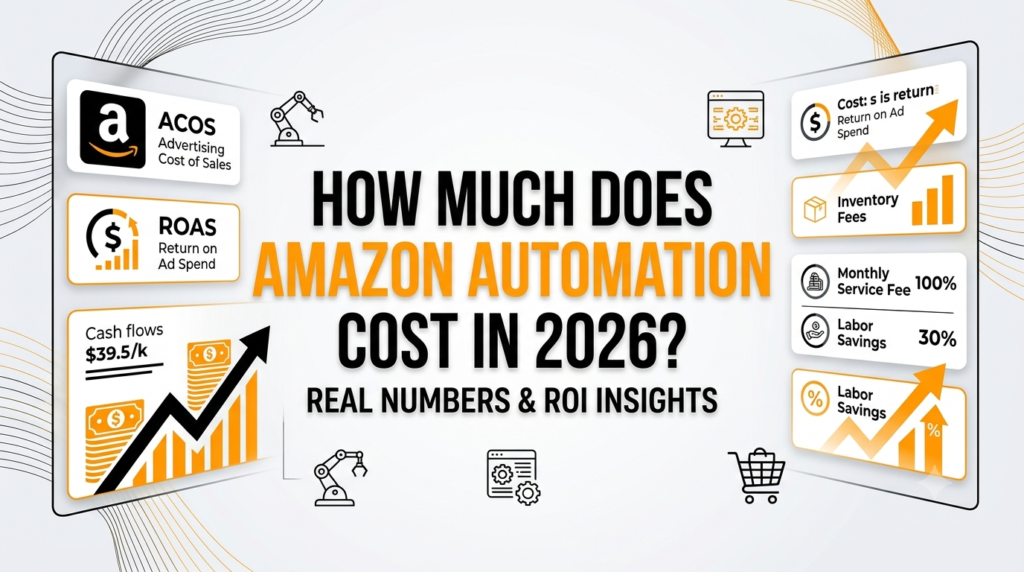
How Much Does Amazon Automation Cost in 2026?
Calculating your true cost requires looking at both startup capital and recurring operational expenses. Reliable management agencies operate with clear pricing structures so store owners know exactly how capital is allocated across the business lifecycle.
One-Time Setup Fee
Most reputable management companies charge an initial setup fee to cover onboarding, technical account infrastructure, legal permissions, and catalog research. This payment grants access to the team’s existing supplier networks, proprietary software systems, and operational workflow.
Upfront setup fees typically range between $10,000 and $30,000 depending on the scope of management, fulfillment model, and asset allocation. Entry-level setup packages often provide basic listing configurations, while enterprise tiers include exclusive distributor access or custom brand development assets.
Inventory Investment
Amazon store management is a physical retail business, not a software subscription. Outside of agency service fees, your largest continuous expense will be inventory acquisition.
Without physical inventory sitting in Amazon fulfillment centers, your store cannot generate sales volume. Investors must allocate capital to purchase initial inventory runs and fund restock cycles while waiting for Amazon payouts. For Wholesale FBA or Private Label structures, working capital reserves generally require $5,000 to $20,000 at launch.
Monthly Management Fee
Agencies structure their management service compensation using two standard pricing formats:
- Net Profit-Share Model: The agency takes a performance split (typically 20% to 50% of net profits), ensuring their revenue remains tied directly to your store’s profitability.
- Flat Retainer Model: A fixed management fee (usually $500 to $2,000 per month) charged regardless of sales volume, sometimes combined with a smaller profit percentage.
Amazon Seller Fees
Amazon charges specific platform fees regardless of whether you manage your store independently or hire an agency. These fees are deducted directly from your account balance.
The basic cost includes the Professional Seller Account subscription fee of $39.99 per month. Additionally, Amazon charges referral fees ranging from 8% to 15% per transaction, along with FBA storage and pick-and-pack fulfillment fees based on item weight and physical dimensions.
PPC Advertising Budget
Generating targeted sales traffic on Amazon requires structured Pay-Per-Click (PPC) ad campaigns. While established products earn organic rankings over time, sponsored ad campaigns build sales velocity and initial product review momentum.
For Wholesale FBA models, ad spending is minimal because products tap into existing buy-box traffic. For Private Label launch strategies, ad budgets generally require $500 to $2,000 per month during initial market insertion phases.
Software & Automation Tools
Operating a data-driven Amazon store requires specialized software platforms for rank tracking, inventory forecasting, profit tracking, and automated repricing.
Enterprise agencies utilize centralized toolsets, but individual store accounts require direct API connections to platforms such as Helium 10, Jungle Scout, or specialized repricers. These software applications cost between $100 and $300 per month in total subscription fees.
Business Registration & LLC Costs
Before onboarding with a management team, you must establish a legal business entity to hold store assets and apply for brand reseller accounts.
Forming a Limited Liability Company (LLC), obtaining a federal Employer Identification Number (EIN), securing state reseller permits, and opening a dedicated business checking account costs between $500 and $1,500 depending on your filing state.
Product Photography & Branding
If your store strategy includes Private Label products or custom bundling, high-converting visual assets are necessary to drive customer conversions.
Professional studio photography, 3D render graphics, and A+ Content design typically cost between $500 and $2,500 per product line. Wholesale FBA models generally bypass this expense by utilizing existing brand manufacturer assets.
Miscellaneous Costs
Every business incurs minor background expenses that must be included in annual financial planning.
Budget approximately $500 to $1,200 annually for commercial general liability insurance, which Amazon requires once a seller account maintains sales volume over specified thresholds. Additionally, set aside funds for annual state franchise taxes and CPA accounting support.
Amazon Automation Cost Breakdown
Here is an overview of the primary financial commitments required to launch and scale a managed Amazon store in 2026.
| Expense Category | Estimated Cost Range | Why It Matters |
| Agency Setup Fee | $10,000 – $30,000 | Secures operational infrastructure, distributor access, and store build-out. |
| Initial Inventory Fund | $5,000 – $20,000 | Capital necessary to buy physical product inventory from authorized suppliers. |
| Business Entity & LLC | $500 – $1,500 | Establishes legal business structure, state tax permits, and corporate compliance. |
| Software Subscriptions | $100 – $300 / month | Connects automated repricing, inventory tracking, and financial reporting tools. |
| Monthly Ad Budget (PPC) | $300 – $1,500 / month | Drives customer traffic, secures buy-box positioning, and accelerates search rankings. |
| Commercial Insurance | $500 – $1,200 / year | Protects business assets and satisfies Amazon mandatory seller compliance rules. |
What Factors Affect Amazon Automation Pricing?
Several key variables dictate total startup expenses and ongoing operating overhead across different automation environments:
- Selected Business Model: Wholesale FBA stores typically require lower initial ad spend but consistent inventory working capital. Private Label models demand higher upfront branding and ad costs to launch proprietary products.
- Product Sourcing Relationships: Access to authorized brand-direct distributors costs more upfront but protects seller accounts from supply chain disruptions and policy violations.
- Scale of Operations: Launching a single store requires less setup capital than building a multi-brand e-commerce portfolio across international Amazon marketplaces.
- Fulfillment Logistics: Stores utilizing third-party prep centers (3PL) incur per-unit inspection costs, whereas agencies with in-house warehouses often bundle prep rates into service tiers.
Cheap vs Premium Amazon Automation Services
Not all management agencies operate with equal standards of compliance, transparency, or strategic depth. Evaluating low-tier providers against professional firms reveals distinct operational differences.
| Operational Feature | Low-Cost Providers ($2k – $5k Setup) | Premium Automation Agencies ($15k+ Setup) |
| Sourcing Method | Retail arbitrage or risky dropshipping channels. | Direct authorized brand wholesale contracts. |
| Compliance & Safety | High risk of policy flags, IP claims, or store bans. | Strict adherence to Amazon Terms of Service (ToS). |
| Account Ownership | Frequently demand full admin control of primary credentials. | Client retains 100% owner access via secondary permissions. |
| Communication | Unscheduled chat app updates; inconsistent data. | Dedicated account management and regular financial reporting. |
| Pricing Transparency | Hidden fees introduced post-contract signing. | Itemized upfront setup and clear profit-sharing agreements. |
Hidden Costs Most Companies Don’t Tell You About
When creating financial forecasts for an automated Amazon store, unexpected operational expenses can strain your cash flow if left out of initial calculations.
- Prep Center Fees: Products sent to Amazon fulfillment centers must undergo inspection, item labeling, poly-bagging, and box prep. Independent 3PL prep centers charge between $1.00 and $2.50 per unit.
- Return & Liquidation Reserves: Every retail channel deals with customer returns. Reserve 2% to 5% of monthly revenue to absorb unfulfillable items, return processing fees, or inventory liquidations.
- Capital Financing Costs: If you finance inventory purchases using credit lines or business loans, monthly interest payments must be subtracted from net margins to reflect true business profit.
- Long-Term Storage Surcharges: Inventory stored in Amazon warehouses longer than 180 days incurs aged storage surcharges. Proper inventory forecasting prevents unnecessary storage fees.
Is Amazon Automation Worth the Cost?
Determining whether hiring a management firm makes financial sense depends entirely on your available capital, timeline, and ROI targets. Managed e-commerce stores should be viewed as asset-building enterprises rather than overnight profit engines.
Advantages
- Hands-Off Execution: Experienced e-commerce professionals run daily operations, saving you hundreds of hours of manual labor.
- Leveraged Expertise: Taps directly into established distributor relationships, bulk shipping rates, and proven launch tactics.
- Scalable Asset: Builds an equity-backed online retail asset that can eventually be valued and sold on digital brokerage platforms.
Disadvantages
- Capital Requirements: Requires substantial liquidity upfront for setup fees, legal structures, and inventory rounds.
- Market Adjustments: E-commerce sales fluctuate based on consumer seasonality, supply chain delays, and category demand shifts.
- Implementation Timelines: Building consistent wholesale supply chains and ranking metrics requires several months of patient execution.
How to Avoid Overpaying an Amazon Automation Company
Protect your financial investment by following actionable guidelines when negotiating terms with an agency partner:
- Demand Net-Profit Agreements: Ensure agency performance splits are calculated on net profit after all inventory costs, shipping fees, Amazon seller fees, and ad spend are subtracted.
- Verify Supplier Authenticity: Ask the agency to provide proof of brand-direct invoices and authorized distributor channels to avoid policy compliance issues.
- Retain Full Ownership: Never surrender master logins for your Amazon Seller Central account or legal LLC documents. Grant agencies secondary user access permissions only.
- Audit Inventory Management: Ensure your management team uses inventory forecasting systems to prevent over-ordering or paying aged storage fees.
Pro Tip: Before transferring any initial setup fee, confirm that your management agency uses verifiable wholesale invoices from brand-authorized distributors. Invoices from retail stores or unverified liquidators can trigger IP complaints and jeopardize your seller account.
Warning Signs of Overpriced Amazon Automation Services
Watch out for these common industry red flags when vetting potential management teams:
- Promises of guaranteed fixed monthly returns regardless of market conditions.
- Requests to run dropshipping operations off retail store websites.
- Refusal to show real, verifiable account performance data or client case studies.
- Pressure to sign contracts without clear refund terms or service scope definitions.
- Management teams requesting full control over your primary business banking access.
Key Takeaways
- Total Investment Scope: Expect upfront capital requirements between $15,000 and $50,000+, covering setup, legal fees, software, and physical inventory.
- Variable Fee Structures: Professional providers charge setup fees combined with performance-based net profit splits.
- Capital Asset Reality: Managed stores require dedicated inventory capital to restock top-selling products continuously.
- Strict Compliance Matters: Avoid low-cost providers using high-risk dropshipping tactics that endanger your store standing.
Final Thoughts
Amazon automation can be a profitable business model, but success depends on choosing the right strategy and understanding the real costs involved. While setup fees, inventory, software, and ongoing management require a significant investment, working with a transparent and experienced automation partner can help you avoid costly mistakes and build a sustainable Amazon business.
Before making any investment, compare service providers carefully, ask the right questions, and make sure you understand exactly what you’re paying for. If you’re looking for honest guidance and transparent pricing, Automation Amazom is here to help. Contact our team today for a free consultation and discover the best Amazon automation solution for your goals.